
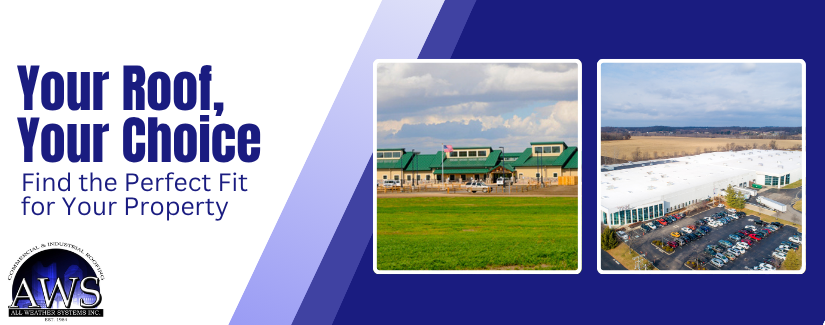
When building or renovating a property, choosing the right roof is one of the most important decisions you'll make. Your roof affects everything from energy efficiency to maintenance costs and curb appeal. Two main options exist: flat roofs and pitched roofs. Each comes with its own advantages and drawbacks.
At All Weather Systems, we know that every building has unique needs. Let's explore the differences between flat and pitched roofs to help you determine which is the best choice for your project.
A flat roof is nearly level, with a slight slope to allow water drainage.
Flat roofs typically require fewer materials and less labor than pitched roofs, making them a budget-friendly option. A flat roof can serve as extra space for HVAC units or solar panels. Routine maintenance and repairs are safer and simpler on a flat surface. Many contemporary designs favor flat roofs for their sleek and minimalist appearance.
Water can pool if drainage isn't properly designed, leading to leaks or structural damage. Flat roofs generally don't last as long as pitched roofs and may require more frequent repairs. Without a slope, it can be harder to insulate a flat roof effectively, which may increase energy costs.
A pitched roof has a noticeable slope, allowing water, snow, and debris to slide off easily.
The slope prevents water buildup, reducing the risk of leaks and structural damage. Pitched roofs, especially those made with durable materials, tend to last longer than flat roofs. This helps regulate indoor temperatures, improving energy efficiency. Pitched roofs suit many architectural styles, making them a timeless choice.
More materials and labor are required, making it a pricier option. Unlike flat roofs, the sloped design doesn't allow for HVAC placement. Repairs can be more challenging due to the steep angles.
So, how do you decide between a flat roof and a pitched roof? Consider the following factors:
In areas with heavy rain or snow, a pitched roof is often the best choice because it sheds water more efficiently. Flat roofs work well in drier climates but need proper drainage to prevent water buildup.
Flat roofs are a popular choice for commercial buildings due to their cost-effectiveness and ability to hold equipment. Pitched roofs are commonly chosen for their durability and insulation benefits.
If you want a low-maintenance option, a pitched roof typically lasts longer and requires fewer repairs. A flat roof may need more frequent inspections and upkeep to prevent leaks.
If cost is a major factor, flat roofs are usually cheaper upfront. Pitched roofs may save money in the long run due to their durability.
Flat roofs offer a modern, minimalist look. Pitched roofs provide a classic, traditional appearance.
When choosing the right roof, think about your building's structure, climate, budget, and design preferences. Both flat and pitched roofs have benefits, and the best choice depends on your specific needs.
At All Weather Systems, we specialize in high-quality roofing solutions tailored to your property. Whether you prefer a flat or pitched roof, our experts can help you make the best decision. Contact us today to discuss your roofing options!
Local: 740-323-3174 | Toll Free: 866-381-7663